

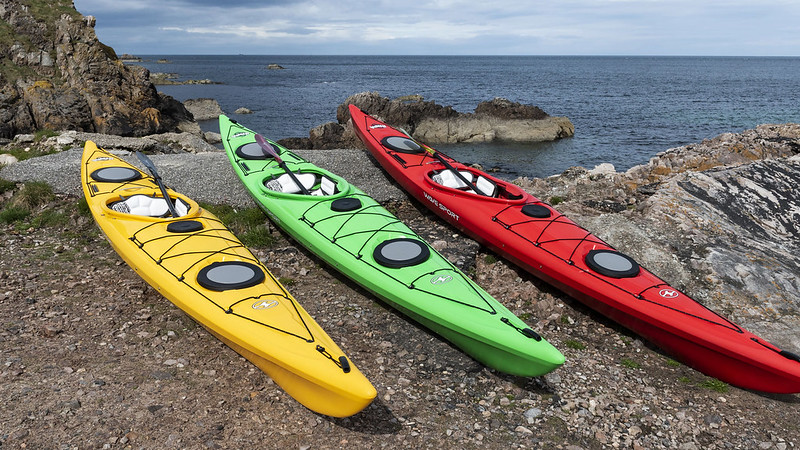
It may surprise many paddlers to learn that Wavesport has been a British owned and based kayak manufacturer since 2019. While founded in the United States in the the 1980's, where they focused on the white water scene, they have recently expanded the available sizes of their touring model. The Hydra is a newer family of polyethylene “sporty tourers” that aims to bridge the gap between classic sea kayaks and more recreational touring craft. With hints of Wavesports whitewater heritage built into a modern sea kayak touring design, the various Hydra models give paddlers a range of options of speed, agility and sizing in a stable, comfortable and compact package.
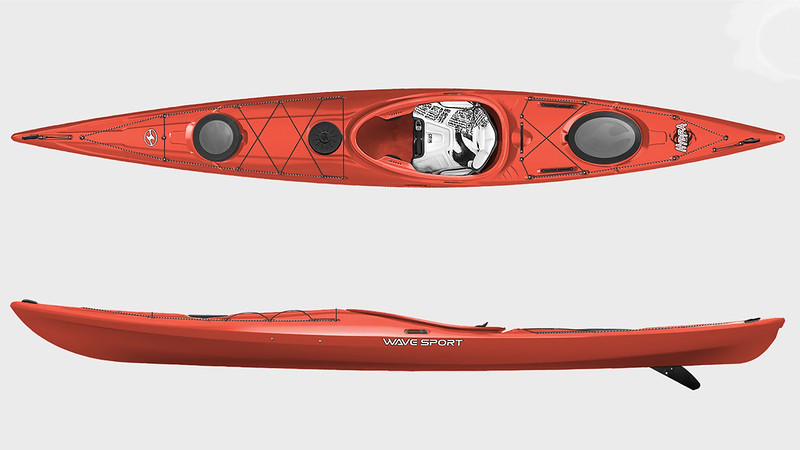
Hydra
Hydra 125 LV
Length 375cm (12’4”) Width 61cm (24”) | Avg Paddler ≈ 170cm (5’7”) 70kg (154lb)
Hydra 125
Length 385cm (12’7”) Width 63.5cm (25”) | Avg Paddler ≈ 180cm (5’11”) 80kg (176lb)
Hydra 145 LV
Length 442cm (14'6”) Width 57cm (22.5”) | Avg Paddler ≈ 170cm (5’7”) 70kg (154lb)
Hydra 145
Length 452cm (14’10”) Width 59.5cm (23.5”) | Avg Paddler ≈ 180cm (5’11”) 80kg (176lb)
What visually stands out the most with your first look at these boats is perhaps their 'CoreTour' outfitting that Wavesport have brought across from the 'Core WhiteOut' outfitting of their whitewater boats. With their funky black and white patterned marine vinyl pads with adjustable backband, hip pads, thigh braces and leg lifters. The top of the hip pad also flips out to give shoulder padding if you are carrying the boat on your own.
Size wise the cockpit coamings are quile long in all these models. Most paddlers will need to move the thigh braces and foot pegs quite far back to get a good fit, but this gives plenty of room for longer legged paddlers to get in and out of these boats.
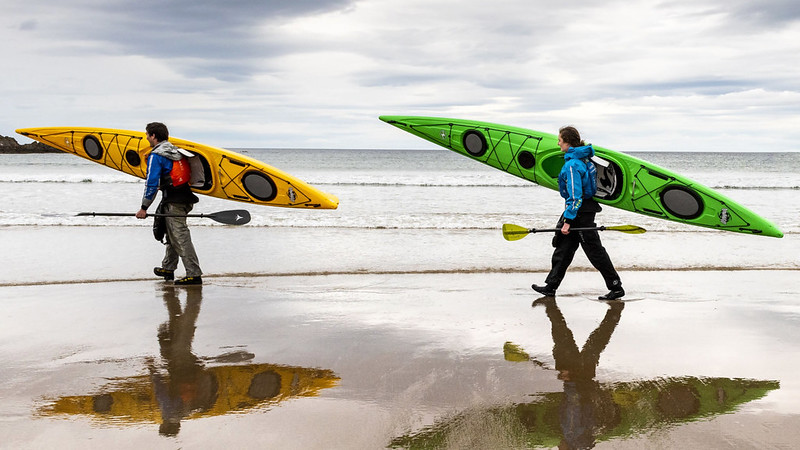
The decks are outfitted with quite a reasonable amount of deck fittings and bungee cord and use reflective deckline, which is a nice touch. Behind the cockpit are a pair of YakAttack GearTrac accessory rails for mounting items like cameras, and a strong security grab point. The retractable carry handles are a neat and smart idea but they do make it harder to hold onto the boat when you are in the water and can snag your towline when towing.
The spring loaded skeg system is controlled by a racheted slider that sits just in front of your hips on the top side of the deck. This can catch you knuckles ocasionally, particularily in the wider 125's. An optional rudder can be fitted however with short boats like these we would recommend most users are better just having a skeg and Understanding the physics of sea kayaking in the wind.
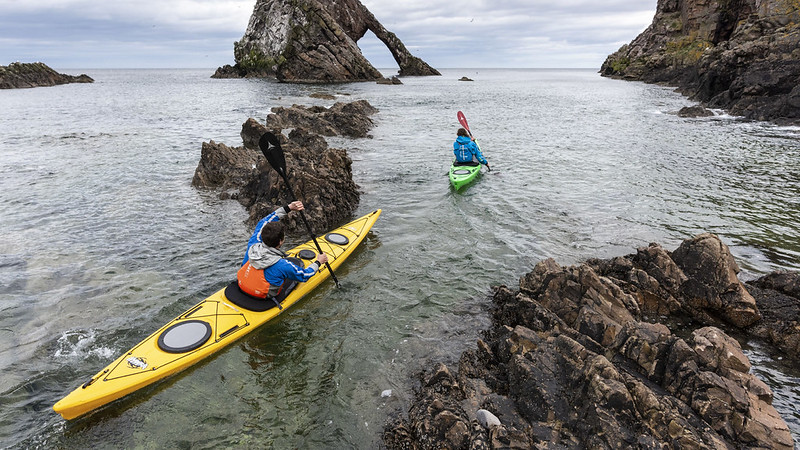
The bow and stern hatches are sealed wiith a pair of wide foam bulkheads that do eat into the available storage space, however Wavesport have foregone the rear day hatch in favour of a smaller foredeck hatch to avoid the use of a third bulkead that would reduce the carrying capacity even more.
While the foredeck hatch can't carry much more than a few chocolate bars, the main hatches of the 145's can carry enough for an overnight trip for a minimalist camper. To camp from the 125's you would have to be the sort of camper that cuts their toothbrush in half or even better leave's it at home along with almost everything else, but then that's not what these boats are designed for. Their short length put them firmly in the day touring range.
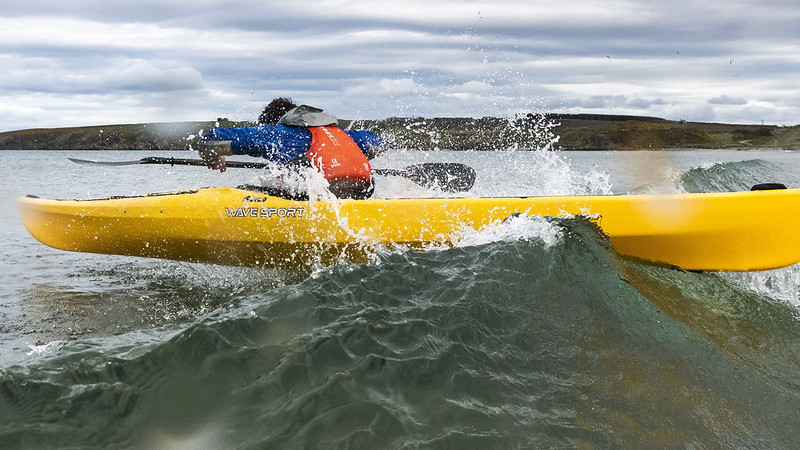
The hulls are wide and flat with hard chines and slab sides. This gives plenty of confidence inspiring initial stability and lifts the ends of the boat clear of the water when edging to turn. However these hard chines can trip you over if not edged correctly when crossing eddylines and surfing. Also the secondary stability isn't quite as pronounced as the primary.
The 125's are 4cm wider than the 145's and as such are more stable. They are also more manoverable due to their short length however their width makes them difficult to put and hold on edge to, for example, use an outside edge turn. The LV's are almost 3cms narrower than the Standard's and as such give an equateable level of stability and edge control for the appropriately sized paddler for each model size.
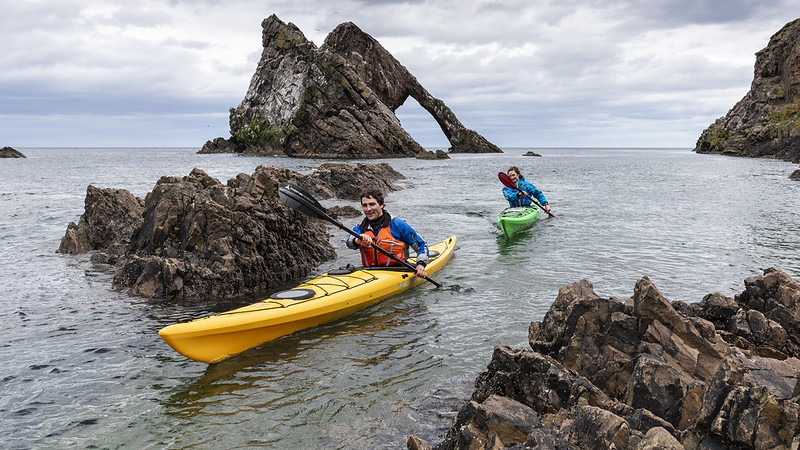
For their relatively short length's these boats are reasonably fast, due to their minimal rocker from bow to stern. However the 125's are very short and quite wide for touring boats and won't be able to keep pace with 16 foot plus boats. The 145's at a push can just about do this but you will need to be fit and make every stroke count to do so.
To help prevent the bow diving in waves, due to the reduced rocker, the designer's have added plenty of volume, flair and rake to the front of the boat and this works well in all but the steepest of waves. The steeper, more plumb stern won't allow you to back surf for long before broaching but again this helps these's short boats carry more speed than they would otherwise.
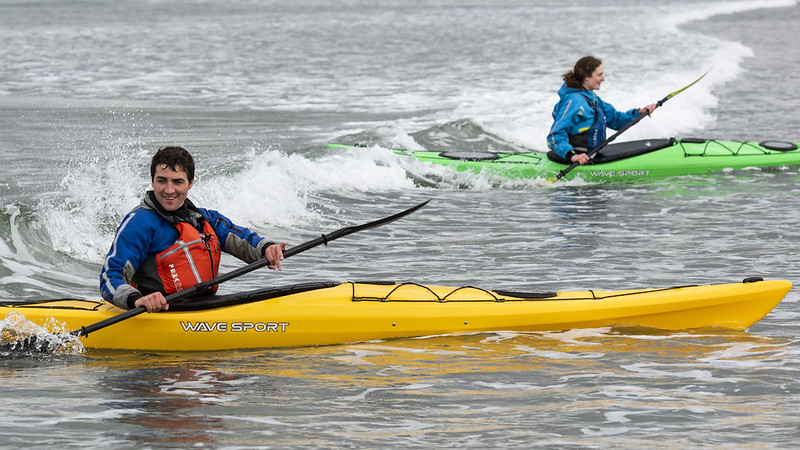
So is the Hydra right for you? The very positive initial stability of both the 125 Hydra models will suit beginner paddlers who will appreciate the confidince inspiring satability. The relative speed and carrying capacity of the 145's will suit intermediate paddlers looking to cover a bit more distance and maybe even the ocassional overnight trip. The raked and flared bow will allow beach surfing and tide race play in moderate conditions however the lack of rocker will limit the boats ability in more advanced steep wave conditions where the bow is prone to diving. The quality outfitting will keep most people comfortable and the long cockpit's are well suited for longer legged paddlers looking for a short boat that will fit them.
UK Deals
Price Check:

By Philip Clegg
With over two decades of working in the sea kayaking industry, Phil is a Paddle UK Level 5 Sea Kayak Coach and former record holder for the Circumnavigation of Britain. He can mainly be found coaching on the sea around Anglesey. That's when he's not researching and writing on all things sea kayaking.