


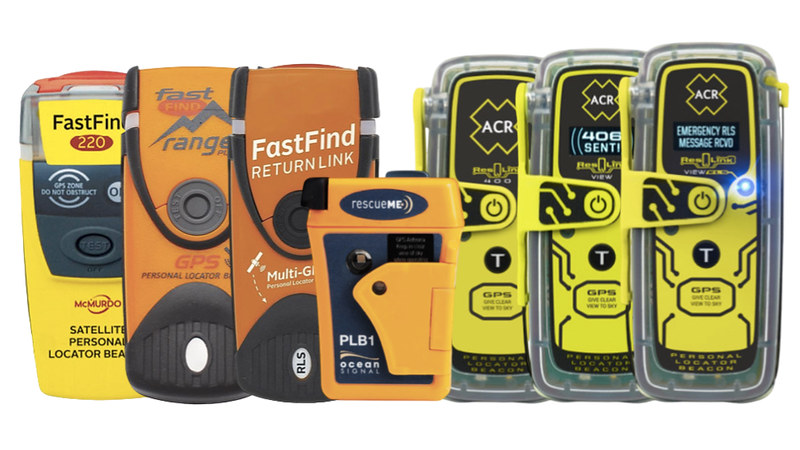
A Personal Locator Beacon (PLB) integrates three separate signal technologies. Global Navigation Satellite System (GNSS) positioning, 406 MHz satellite communication distress signal and a 121.5 MHz homing capability. This enables a PLB to quickly and accurately relay your position to a worldwide network of search and rescue satellites.
As a sea kayaker, when you are in need of the emergency services you can often be in a very difficult situation. You could be hands on dealing with a casualty on the water, or even be the casualty in the water. Whatever the situation is it can be very useful to notify the emergency services of your need for help and location with the press of a button.
Although they are expensive to buy upfront, the fact that there is no subscription fee and they have warranties for up to 5 years, means they can be a cost effective option for calling for help in an emergency. However there is a wide variety of units on the market, with different specifications and features. We look at which ones best suit your needs specifically as a sea kayaker.
Affiliate Disclosure: This page contains affiliate links. As an Amazon Associate and eBay Partner, we may earn a commission from qualifying purchases made through these links at no additional cost to you.
McMurdo FastFind 220
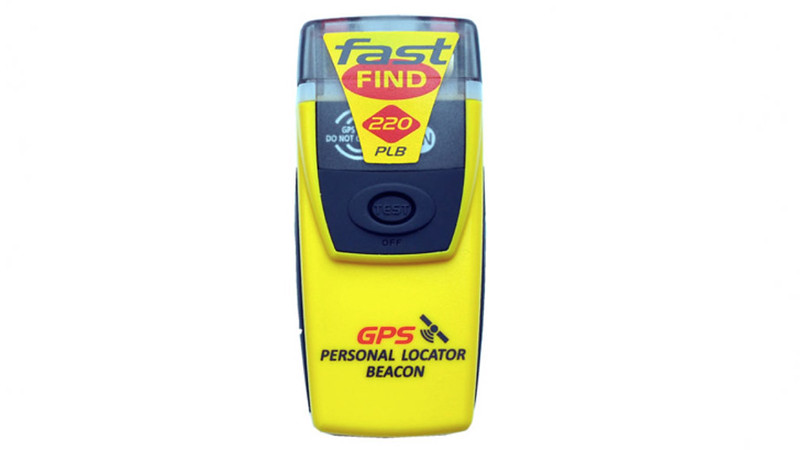
The McMurdo FastFind 220 is the cheapest PLB you can find on the market and as such is a good budget option. Having an above average battery storage life adds to this value. To activate the device you remove the top, extend the antenna and press the 'on' button. The provided bouyancy pouch is made of neoprean which also gives it good protection. However its bulk does make it less convenient to store the device in a drysuit or PFD pocket. A white light strobe helps the emergency services pinpoint your location in the dark.
Key Specs and Features:
- RRP: £330
- Waterproof: 10m
- Floats: No (Bouyancy pouch supplied)
- Strobe: White light
- Battery operation life: +24hrs
- Battery storage life: 6 years
- Drop proof: Not rated
- Self test: Battery and GPS
- Dimensions: 106x47x34mm
- Weight: 152g
- Warranty: 5 years
Check price at: Amazon
McMurdo Fastfind Ranger
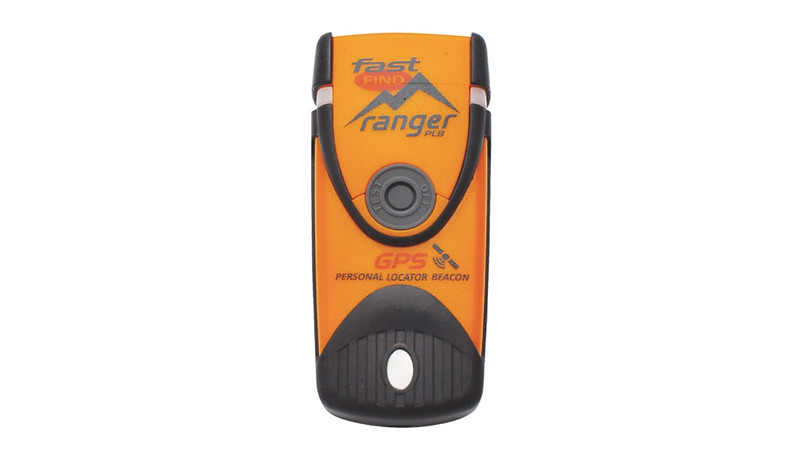
The McMurdo FastFind Ranger is built on the same chassis as the McMurdo Fastfind 220 PLB but aimed at walkers instead of mariners. It has the same retail price as the 220 and the same above average battery storage life and as such it is a good value budget option. It feels more robust and has increased rubberised protection to make it more rugged. This adds a little to the size and weight but makes for a better protected unit, however it isn't rated as drop proof. It is waterproofed to the same standard as the 220 but doesn't come with a bouyancy pouch and as so does not float. To activate the device you remove the top, extend the antenna and press the 'on' button. A white light strobe helps the emergency services pinpoint your location in the dark.
Key Specs and Features:
- RRP: £330
- Waterproof: 10m
- Floats: No
- Strobe: White light
- Battery operation life: +24hrs
- Battery storage life: 6 years
- Drop proof: Not rated
- Self test: Battery and GPS
- Dimensions: 112x50x36mm
- Weight: 164g
- Warranty: 5 years
Check price at: Cactus Navigation
Ocean Signal RescueME PLB1
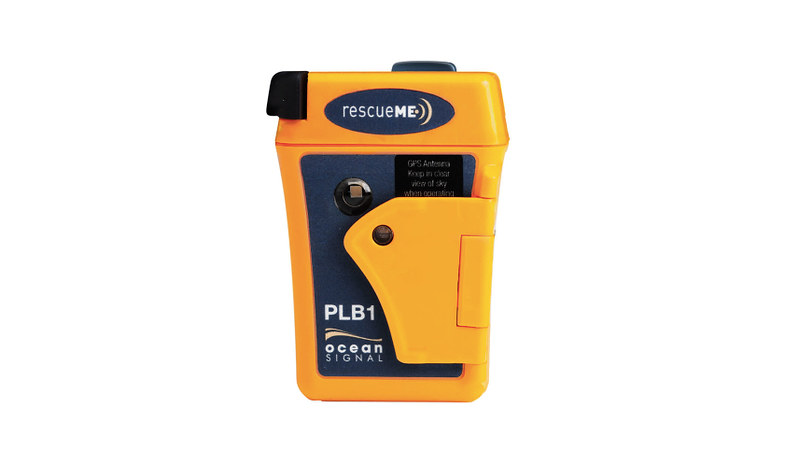
The Ocean Signal RescueME PLB1 is the smallest and lightest PLB on the market, as well as having the longest battery storage life and being rated as the toughest and most waterproof. It can be fitted to a PFD using it's mounting cradle and strap, or its compact and robust form means you can put it in a drysuit or PFD pocket, where it is robust enough to cope with being knocked about. A spring loaded flap covers the activation button preventing inadvertent use & the retractable antenna is easily deployed by simply pulling it out. It can be activated with one hand, even with gloves on. A white light strobe helps the emergency services pinpoint your location in the dark.
Key Specs and Features:
- RRP: £355
- Waterproof: 15m
- Floats: No (Bouyancy jacket available)
- Strobe: White light
- Battery operation life: +24hrs
- Battery storage life: 7 years
- Drop proof: 1m
- Self test: Battery and GPS
- Dimensions: 77x51x33mm
- Weight: 116g
- Warranty: 5 Years
Check price at: Amazon or Ebay
ACR ResQLink 400
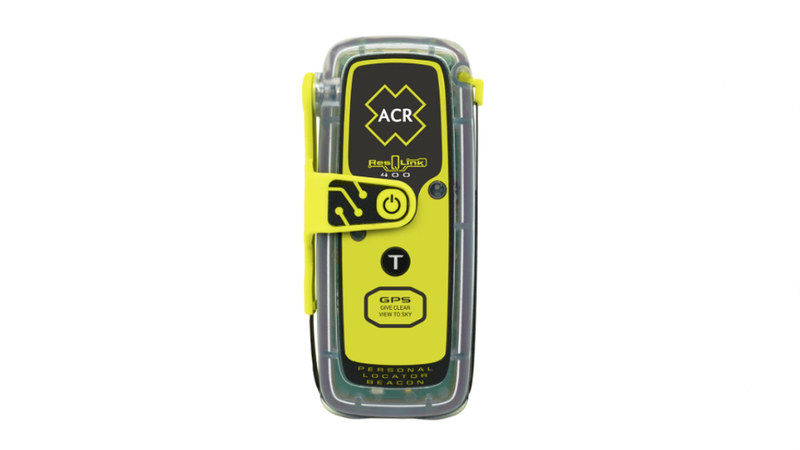
The ResQLink 400 PLB is buoyant. It's white light and infrared strobe facilitate's night time or low visibility rescues. To activate you slide out and release the antenna from where it is wrapped around the outside of the unit, this exposes the 'on' button. The antenna is quite prone to being accidentally released, especially when putting in or getting out of a drysuit or PFD pocket so its probably best stored inside a hatch. The clear housing feels a little brittle and isn't drop proof but it does make it easy to check for any water ingress.
Key Specs and Features:
- RRP: £365
- Waterproof: 10m
- Floats: Yes
- Strobe: White and Infrared
- Battery operation life: +24hrs
- Battery storage life: 5 years
- Drop proof: Not rated
- Self test: Battery and GPS
- Dimensions: 115x52x38mm
- Weight: 144g
- Warranty: 5 Years
Check price at: Amazon
McMurdo FastFind ReturnLink
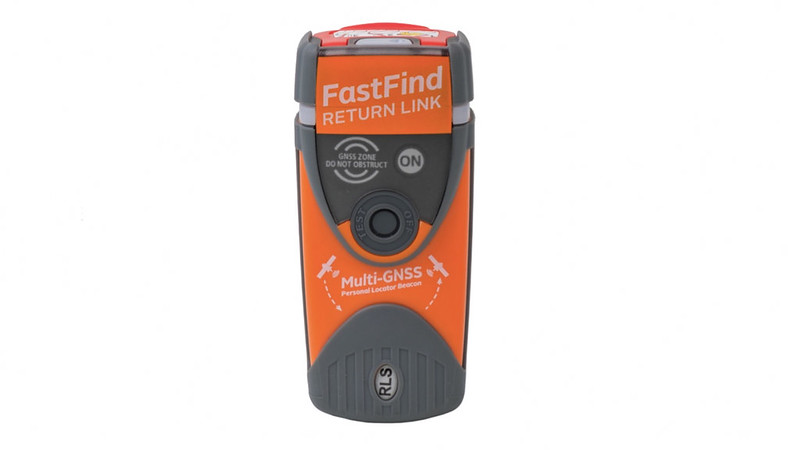
The McMurdo FastFind ReturnLink PLB, uses the Galileo Return Link Service to send a signal back to the beacon confirming the distress alert has been received and the location coordinates have been detected. This takes aproximately 15 minutes and activate's a blue light on the beacon when completed. To activate the device you remove the top, extend the antenna and press the 'on' button. It comes with a mounting cradle however this is designed to be clipped to the oral tube of a lifejacket and so is not suitable for sea kayakers. The casing has rubber sections which makes the unit feel fairly rugged, however it isn't rated as drop proof. The provided bouyancy pouch is made of neoprean and gives it more protection. However it does make it less convenient to store in a pocket. A white light strobe helps the emergency services pinpoint your location in the dark.
Key Specs and Features:
- RRP: £399
- Waterproof: 10m
- Floats: No (Bouyancy pouch provided)
- Strobe: White light
- Battery operation life: +24hrs
- Battery storage life: 5 years
- Drop proof: Not rated
- Self test: Transmitters, battery + light
- Dimensions: 112x50x36mm
- Weight: 164g
- Warranty: 5 years
Check price at: Cactus Navigation
ACR ResQLink 410 RLS

The ResQLink 410 PLB is is the same as the above 400 with the inclusion of the RLS. This uses the Galileo Return Link Service to send a signal back to the beacon confirming the distress alert has been received and the location coordinates have been detected. This takes aproximately 15 minutes and activate's a blue light on the beacon when completed. The rest of the details are the same as the 400 including a white light and infrared strobe facilitate night time or low visibility rescues. To activate you slide out and release the antenna from where it is wrapped around the outside of the unit, this exposes the 'on' button. The antenna is quite prone to being accidentally released, especially when putting in or getting out of a drysuit or PFD pocket so its probably best stored inside a hatch. The clear housing feels a little brittle and isn't drop proof but it does make it easy to check for any water ingress.
Key Specs and Features:
- RRP: £442.27
- Waterproof: 10m
- Floats: Yes
- Strobe: White and Infrared
- Battery operation life: +24hrs
- Battery storage life: 5 years
- Drop proof: Not rated
- Self test: Battery and GPS
- Dimensions: 115x52x38mm
- Weight: 148g
- Warranty: 5 Years
Check price at: Amazon
ACR ResQLink View
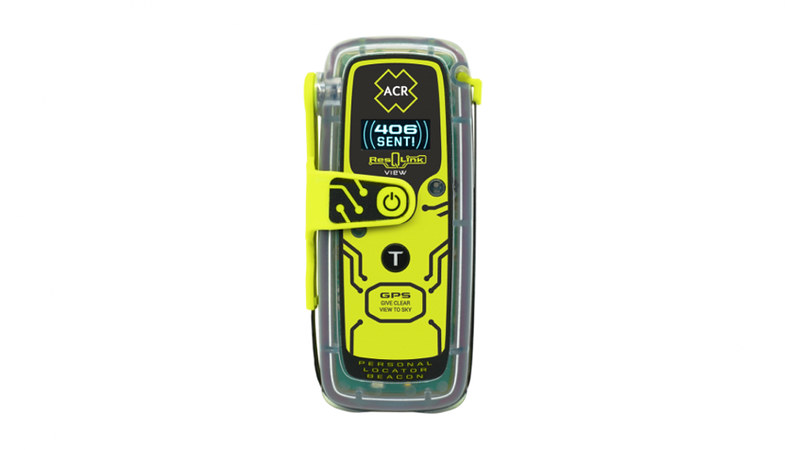
The ResQLink View PLB takes all the features of the ARC ResQLink 400 and adds a digital LCD display allowing you to view live beacon status and GPS coordinates throughout the rescue process. This confirms that the signal is transmitting and the location has been determined. As with the 400 it is possible for the aerial to be pushed loose of its holder and unwrap from where it is wrapped around the body of the unit. Again the clear housing isn't rated drop proof but does make it easy to inspect for water ingress.
Key Specs and Features:
- RRP: £429
- Waterproof: 10m
- Floats: Yes
- Strobe: White and Infrared
- Battery operation life: +24hrs
- Battery storage life: 5 years
- Drop proof: Not rated
- Self test: Battery and GPS
- Dimensions: 115x52x38mm
- Weight: 148g
- Warranty: 5 years
Check price at: Amazon
ACR ResQlink View RLS
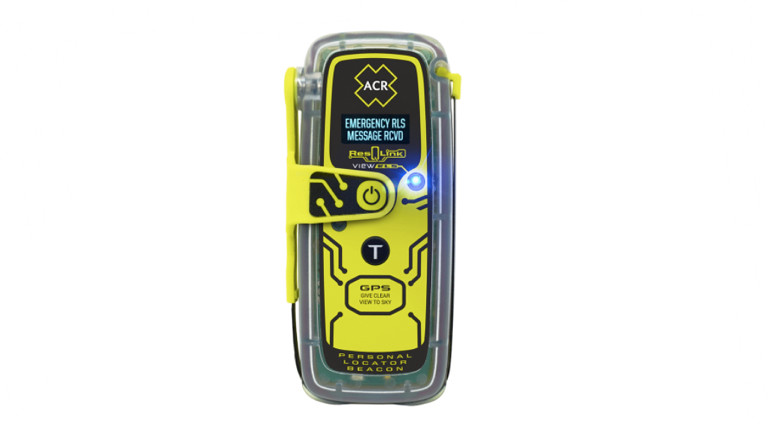
The ResQlink View RLS has the features of the ARC ResQLink View with the addition of the Return Link Service (RLS) feature. RLS works by sending a signal back through the satellite network to confirm to the user that the distress message has been received and their location has been detected. This takes aproximately 15 minutes and confirmation is indicated by a flashing blue light and a corresponding confirmation message on the digital display. Again it is possible for the aerial to be accidentally released and the clear housing isn't rated drop proof but does make it easy to inspect for water ingress.
Key Specs and Features:
- RRP: £500
- Waterproof: 10m
- Floats: Yes
- Strobe: White and Infrared
- Battery operation life: +24hrs
- Battery storage life: 5 years
- Drop proof: Not rated
- Self test: Battery and GPS
- Dimensions: 115x52x38mm
- Weight: 148g
- Warranty: 5 years
Check price at: Amazon
Ocean Signal RescueME PLB3 and

The Ocean Signal RescueME3 is the first PLB to include Automatic Identification System (AIS) and also the first to include Near Field Communication (NFC), Combined with RLS and a white and IR strobe, this easily makes the RescueME3 the most advanced PLB on the market as well as the one with the most acronym's. RLS sends a signal back through the Galileo satellite network to confirm to the user their distress message has been received and their location has been detected. This takes aproximately 15 minutes and confirmation is indicated by a flashing blue light. AIS allows AIS equipped vessels within VHF range to be alerted to the emergency and its location. The NFC capability gives the user smartphone access via the free Ocean Signal Beacon Mobile App to the PLB's data including current battery life, number of self-tests completed and number of GNSS (GPS) tests completed. The RescueME3 has been designed to be installed on a lifejacket and activated upon inflation of the jacket and as such isn't really intended for sea kayakers. However it can still be used by paddlers as it can be activated on its own and although it is too long to fit in most PFD front pockets if you have a hydration pocket on the rear it should fit. There is an optional extra Flotation Pouch accessory that is available to buy.
Key Specs and Features:
- RRP: £600
- Waterproof: 10m
- Floats: No (Bouyancy pouch available)
- Strobe: Yes
- Battery operation life: +24hrs
- Battery storage life: 5 years
- Drop proof: 1m
- Self test: Battery and GPS
- Dimensions: 77x51x33mm
- Weight: 116g
- Warranty: 5 Years
Check price at: Amazon or Ebay
ACR ResQLink AIS

The ACR ResQLink AIS and the Ocean signal RescueME3 are functionally identical, re-branded devices. There are the first new PLB's developed since ACR Electronics acquired Ocean Signal. The Ocean Signal PLB3 is primarily distributed in Europe, Africa, and the Middle East, while the ACR ResQLink AIS is branded for the North/South American markets. The only difference other than branding is the ARC ResQLink AIS includes a broader "multifunction clip system" that provides various attachment options for belts, webbing and lifejackets. There is also an optional extra Flotation Pouch available to buy.
Key Specs and Features:
- RRP: £600
- Waterproof: 10m
- Floats: No (Flotation pouch available)
- Strobe: Yes
- Battery operation life: +24hrs
- Battery storage life: 5 years
- Drop proof: 1m
- Self test: Battery and GPS
- Dimensions: 77x51x33mm
- Weight: 116g
- Warranty: 5 Years
Check price at: Ebay
Need to Know
Programming & Registration
Personal Locator Beacons are pre-programmed with a country code. Most PLB's sold in the UK are programmed to the UK, but you need to check. Whilst they will function anywhere in the world, the first authority to be contacted in an emergency situation would be the UK Coastguard Agency in Falmouth with whom the PLB would be registered.
Registering your Personal Locator Beacon is required by law in most countries. Registering is very important because should your beacon ever be activated, it is how Search and Rescue Teams will know who you are, and the contacts provided may be able to supply information about your specific situation. In the absence of this information, it may take longer for a search-and-rescue operation to begin.
To register your device, you must provide your unique Beacon HEX ID number, which can be found on your PLB and on the packaging it comes with. Use this link to register your device: https://406registration.com/
How do they work?
A PLB is manually activated by the user. It transmits a digital SOS signal on the 406 MHz frequency. As well as your GNSS location it also sends a unique 15-digit identification number. This is picked up by satellite system's.
When the Coastguard receives a message that you are in trouble they will access your beacon registration. This will tell them who the device belongs to and any additional emergency contact information that you have submitted when registering the device. They will then call out the relevant Search and Rescue Service.
The rescue team will then pinpoint your location using your PLB's 121.5 MHz homing signal. This enables the Search and Rescue services to pinpoint your exact location.
Because PLB’s work using satellites your PLB must have a clear line of vision to the sky. This means that it must be kept above the water. It is worth considering how you might achive this when it is operating so as to free up your hands.
They transmit for 24 hours plus and can be used where there is no mobile or VHF signal.
GNSS
This stands for Global Navigation Satellite System and is a combination of the GPS (USA), Galileo (Europe), GLONASS (Russia) and BeiDou (China) systems. This gives faster fix times and better accuracy as well as improved signal in obstructions and redundancy.
Return Link Service
Return Link Service or RLS functionality works when Search and Rescue send a signal back through the Galileo satellite network to confirm to the beacon user that their distress message has been received and their location detected. User confirmation is indicated by a flashing blue light on the PLB.

By Philip Clegg
With over two decades of working in the sea kayaking industry, Phil is a Paddle UK Level 5 Sea Kayak Coach and former record holder for the Circumnavigation of Britain. He can mainly be found coaching on the sea around Anglesey. That's when he's not researching and writing on all things sea kayaking.